
Dewatering bags
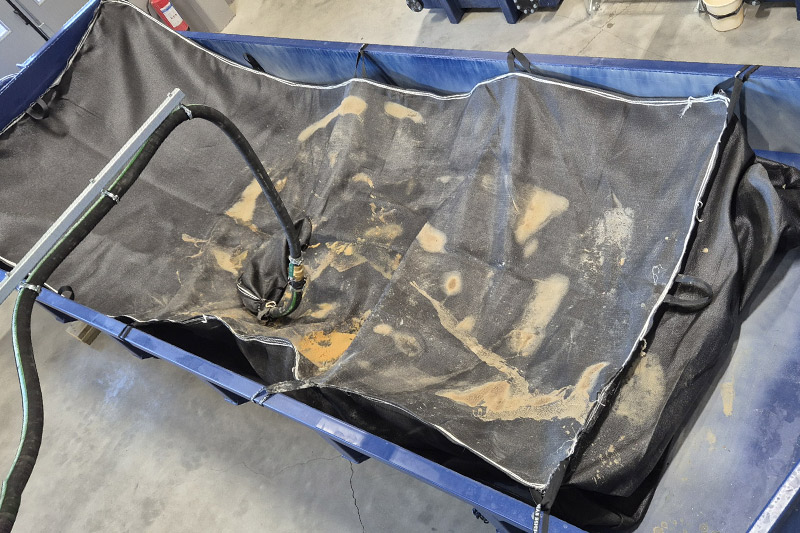
Dewatering bags are a passive method of sludge dewatering, and Swedish Hydro Solutions offers them in various sizes depending on the application. The bags are available in different types of geotextiles — both woven and non‑woven. They allow water to pass through the geotextile while retaining sediment, sludge, and other particles. This makes them a highly cost‑effective solution for the infrastructure and construction sectors, as well as for tunnel projects or similar environments.
Dewatering Box
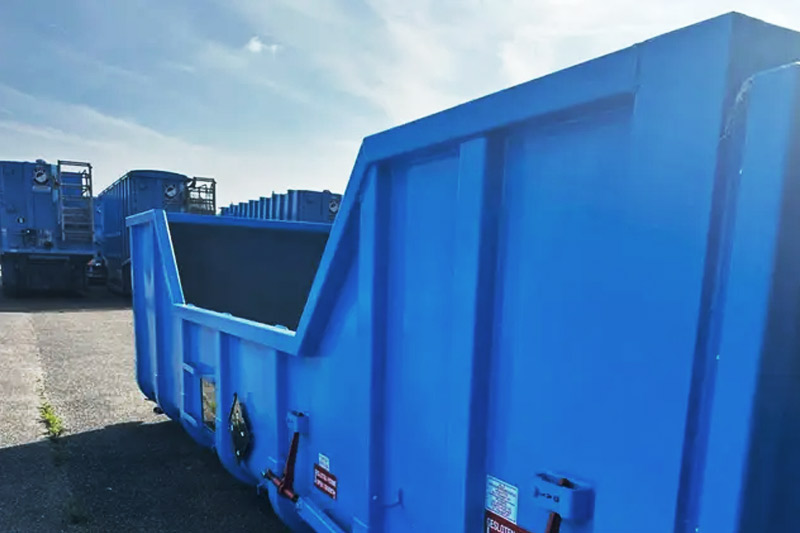
The dewatering tank from Rain for Rent® provides an optimal solution for environmentally friendly, cost‑efficient, and safe sludge dewatering on construction sites and in various other applications. Sludge is introduced into the tank, where it is allowed to settle at the bottom while the water is filtered out through the sides and the bottom of the tank.
The dewatering tank has a capacity of 14 m³.
Sludge conveyor tanks
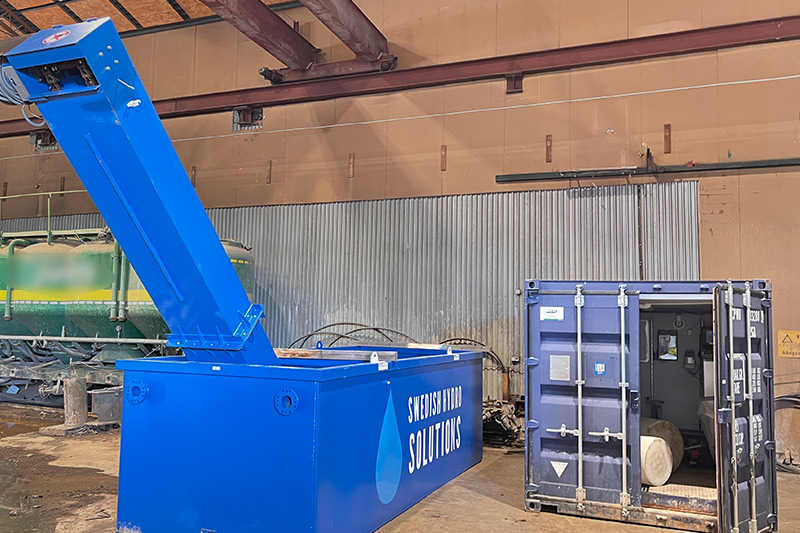
Sludge conveyor tanks are commonly used to handle and dewater sludge from Swedish Hydro Solutions’ lamella separators. They can also serve as an initial pretreatment step for removing suspended solids in projects where the incoming water contains high levels of particulate matter. The sludge is conveyed out of the tank by a scraper mechanism, resulting in efficient sludge dewatering.
Want to know more?
Get in touch with our water treatment specialists to discuss how we can find the perfect sludge treatment solution for your specific needs.