
Short PFAS chains – a growing challenge in water treatment

PFAS are often categorized by the length of their carbon chain. Substances with shorter chains — typically four to five carbon atoms — are referred to as short PFAS chains. They were introduced as replacements for the long‑chain compounds that are already heavily regulated, such as PFOS and PFOA.

Why are short PFAS chains particularly problematic?

Unlike long‑chain PFAS, they do not readily bind to soil, sediment, or living organisms. Instead, they remain in the water and move quickly through soil and groundwater. They do not accumulate in the body to the same extent, but their high mobility means they spread widely in the environment. As a result, they are difficult to capture using conventional treatment technologies.

Implications for water treatment

For those procuring water treatment, this presents a specific challenge:

  • Activated carbon has limited effectiveness because short PFAS chains pass through without being captured.
  • Ion‑exchange media can yield better results, but performance varies depending on the specific PFAS compound.
  • Membrane technologies, such as reverse osmosis, are more effective but require significant resources and produce concentrated waste streams.

What does this mean in practice?

When short PFAS chains are present in water, a single treatment solution is rarely sufficient. It is important that the supplier can demonstrate how the technology performs specifically for these compounds — not only for long‑chain PFAS, which are often easier to remove. For procurement specialists, this makes it critical to evaluate treatment technologies based on their ability to handle short PFAS chains — otherwise, there is a risk of addressing only half the problem.

PFAS projects

Metals, PFAS, Phthalates

Oceana, Liseberg

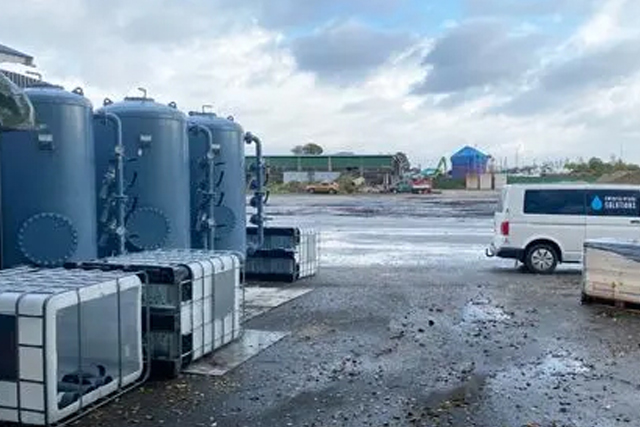
A major fire at Oceana Liseberg in February 2024 contaminated runoff, and Swedish Hydro Solutions quickly installed treatment for PFAS and metals.
Questions about PFAS?

Contact our specialists for more information about PFAS and available treatment technologies. We’re happy to help you find the right solution for your needs.