
Good results in the pre-study before the construction of the West Link
Project Olskroken is one part of a much larger regional infrastructure strategy, which also includes the rail connection through central Gothenburg known as the West Link.
During the construction of the West Link some of the existing properties along the current railroad line will be demolished or rebuilt, and electrical wiring will be reconstructed. The Swedish Transport Administration also builds a new electrical substation for the train traffic at Olskroken.
At the same time, PEAB, which is one of the leading construction companies in the project at Olskroken, explores new technologies for managing and treating storm water in the construction area. In November 2016, a preliminary study was commenced at Olskroken.
– We have considered different methods and techniques, but are in need of a simple solution that doesn’t need large amounts of project space and is easy to integrate into our production. Therefore, the choice of using Swedish Hydro Solutions’s unique water treatment technology was made, a choice that the Swedish Transport Administration also endorse, said Margaretha Ringström, block manager of Time Critical Works at Peab.
A challenge to manage incoming stormwater
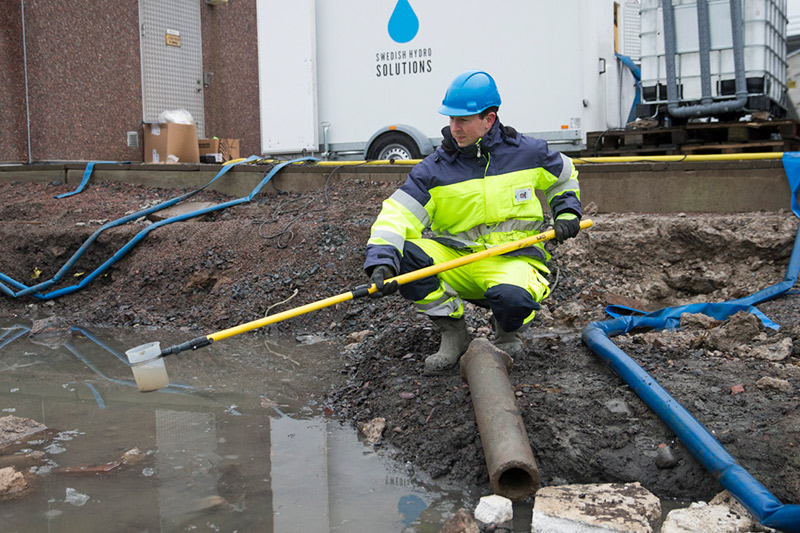
The first challenge in the project was to handle the large volumes of stormwater collected in the construction area. During periods of heavy rain, both the ground at the construction site, as well as excavated shafts, can be filled with large amounts of stormwater, which then will create a bottleneck in the treatments systems that handle the stormwater.
– Usually we fill an entire sedimentation container with stormwater in one day. But If It rains a lot, that volume will increase quickly. That is why we need to have water treatment equipment that is able to manage the rapid changes in the volume of water.
Furthermore, the treatment system need to be easy enough to operate that one of our coworker are able to handle the whole treatment process, says Margaretha Ringström.
The next challenge in the project is to reduce the contamination that is present in the incoming stormwater at the site. Lead, arsenic, copper and mercury are some of the heavy metals that are both naturally occurring in the soil, and they also exist as residues in the surrounding ground because of earlier industrial activities at the site.
Suspended particles in the storm water, such as soil and clay, as well as various types of organic compounds also contribute to the problem with stormwater contamination.
Normally, stormwater treatment requires many hours of work. But with Swedish Hydro Solutions’ solution, one person can manage it easily without it taking time from the rest of the daily operations.
— Margaretha Ringström, Section Manager for Time-Critical Works at Peab.
Special solutions for effective storm water management
Stormwater from construction zones with a lot of concrete often has a particularly high pH value. Peab’s supervisor Jon Göthlund has therefore in cooperation with Swedish Hydro Solutions developed a solution to that problem.
With this method, the incoming stormwater is carried through a specially designed dosage cylinder where carbon dioxide is added in to the water stream, and this solution reduce the pH from 13 to 7. This is a solution that Swedish Hydro Solutions often applied during projects in the United States, but it is a relatively new method in Sweden.
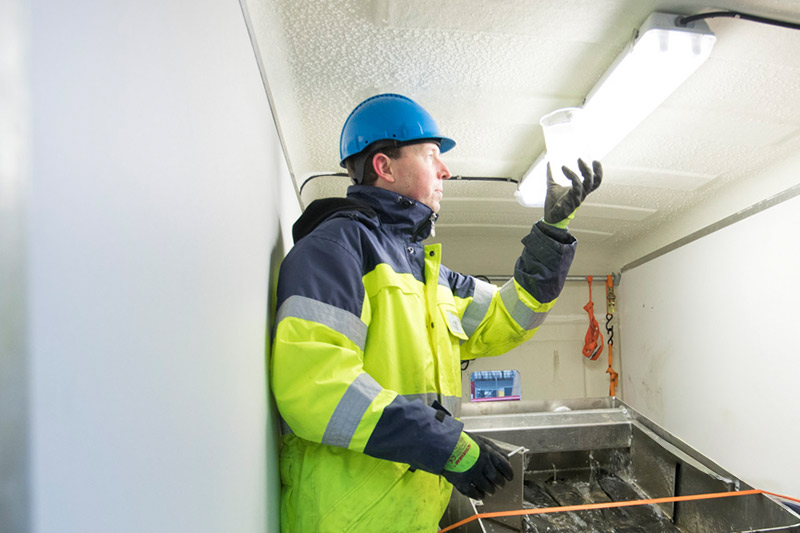
In order to rationalize the water treatment process at Olskroken, the water treatment system from Swedish Hydro Solutions has been placed into a mobile trailer. This generates a system that is both mobile and furthermore it reduces the amount of space needed for the equipment at the project site.
Environmentally friendly process with strong results
With Swedish Hydro Solutions’ solution, the water at the Olskroken grade‑separation project is treated to meet the City of Gothenburg’s guideline values for stormwater. This means the water could have been returned to the stormwater system.
– We hope that the Environmental Department will eventually allow us to discharge the treated water into the system. It feels unfortunate to let it run onto the ground only to become contaminated again. But for now, we have to settle for infiltrating it as best we can, says Margaretha Ringström.
She is particularly pleased that the treatment process can be carried out without adding any hazardous chemicals.
– In times like these, environmental awareness is extremely important, especially when treating water that is already polluted. It feels good to be able to treat it in the most environmentally friendly way possible.
Considers more cooperation in the future
With the strong test results from early in the year, Peab is increasing the volume of water treatment, extending the test period throughout 2017.
If the full test phase for the West Link project proves successful, additional stakeholders are lined up to test chitosan‑based water treatment.
– We have had a visit from NCC, who are interested in how they can manage water volumes in tunnels and excavations around the central station. These are areas where you really do not want water to accumulate, says Margaretha Ringström.
More projects
Stena Recycling
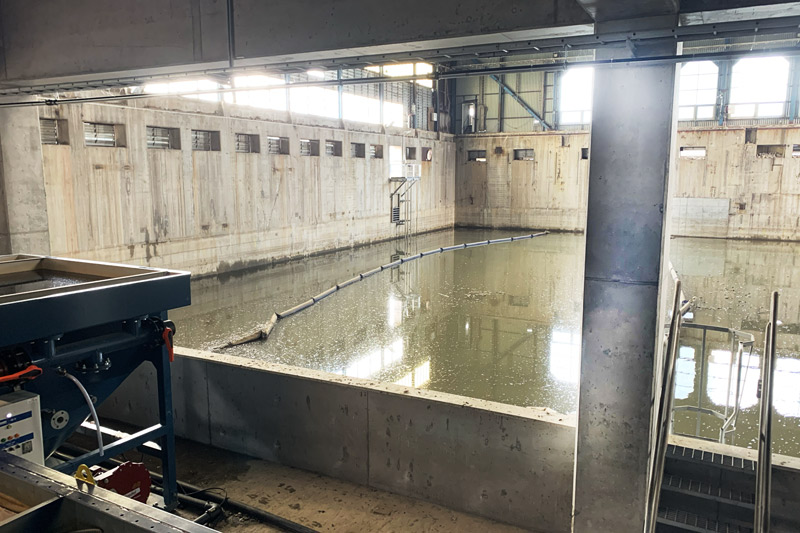
Stena faced high volumes of industrial stormwater after a new retention pond was taken into operation, requiring a robust and reliable treatment setup.
The new Näckenbadet
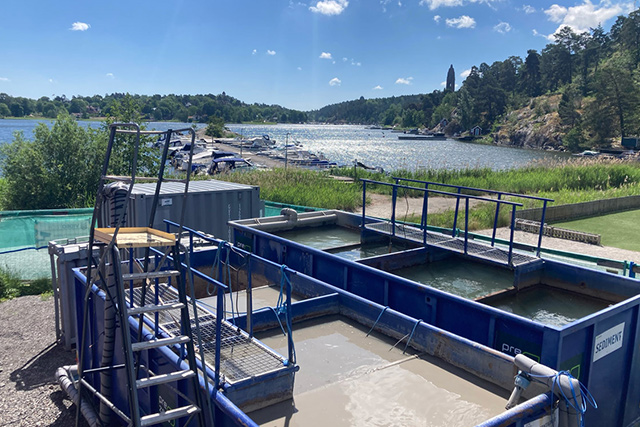
Open dialogue, creative solutions, and Nacka Municipality’s clear communication about the site’s history enabled an efficient full‑scale water treatment setup.
Oceana, Liseberg
A major fire at Oceana Liseberg in February 2024 contaminated runoff, and Swedish Hydro Solutions quickly installed treatment for PFAS and metals.
Need more information?
If you’re seeking more insights about our projects implementations or want tailored guidance for your unique requirements, get in touch with our water treatment specialists.